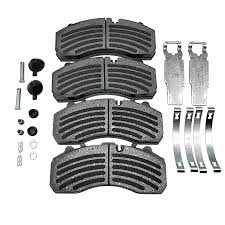


Description
Brake pads are the friction components in a disc brake system.
What they do
-
When you press the brake pedal, brake pads clamp onto the brake disc
-
The friction created slows down or stops the vehicle
Key points
-
Made of friction material bonded to a metal backing plate
-
Designed to wear out over time (this is normal)
-
Usually replaced more often than brake discs
Common signs of worn brake pads
-
Squealing or screeching noise
-
Grinding sound (very worn — urgent)
-
Reduced braking performance
-
Brake warning light (on some vehicles)
Brake Disc (Brake Rotor)
The brake disc (also called a rotor) is a round metal disc attached to the wheel hub.
What it does
-
Spins with the wheel
-
Provides a surface for the brake pads to grip
-
Converts motion into heat through friction
Key points
-
Made of cast iron or steel
-
Designed to withstand high heat
-
Wears more slowly than brake pads
Common signs of worn brake discs
-
Vibration or pulsation when braking
-
Grooves or scoring on the disc surface
-
Reduced braking efficiency
-
Disc thickness below minimum limit
How They Work Together
-
You press the brake pedal
-
Hydraulic pressure pushes the caliper pistons
-
Brake pads squeeze the brake disc
-
Friction slows the wheel and stops the vehicle
👉 Both parts must be in good condition for safe braking.
Maintenance Tip
-
Brake pads are usually replaced every 30,000–60,000 km
-
Brake discs may last 2–3 pad changes, depending on use
-
Always replace pads on both sides of the axle (left & right)




![Isuzu CXZ Clutch Disc 1-31240897-0 OE number by ISUZU Number of Teeth:10 Inner Diameter [mm]:250 Diameter:430. Engine Type: Isuzu 6WF1 / 10PE1](https://sumku.co.ke/wp-content/uploads/2023/03/IMG_20230211_154655-300x300.jpg)




Reviews
There are no reviews yet.