

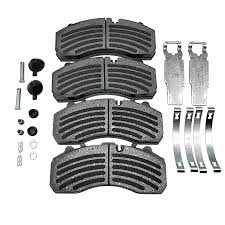

Description
Brake pads are flat pieces made of friction material attached to a metal backing plate. They press against the brake rotors (discs) to generate stopping power. Brake pads for Trucks · Brake pad mercedes – daf – iveco WVA29108 · Brake pad set DAF · Brake pad set DAF · Brake pad set Mercedes · VOLVO BRAKE PAD KIT .
How They Work
- You press the brake pedal.
- Hydraulic fluid sends pressure to the brake calipers.
- The calipers squeeze the brake pads against the rotors.
- Friction between the pads and rotors slows the wheels.
Types
- Semi-metallic: Durable, affordable, and effective; can be noisy.
- Ceramic: Quiet, low dust, long life; more expensive.
- Organic (non-asbestos): Softer, quieter, but wear faster.
- Low-metallic NAO: Good performance, but dustier and noisier.
Tips for installation & maintenance
-
Always inspect your rotors/calipers when changing pads. If the rotor is warped, deeply grooved or overheated, you might need to resurface or replace.
-
After installing new pads: bed-in the brakes (gentle use first few hundred km) to transfer pad material to the rotor for optimum performance.
-
Monitor pad thickness: Many sources say when the friction material gets to ~3 mm you should replace. https://sumku.co.ke/
-
Check for signs of uneven wear, noises (squeal, grinding), increased stopping distance. These may indicate pad, rotor or caliper issues.
-
For trucks operating in hot/hilly/towing conditions: avoid letting pads get too thin because the safety margin under heavy load is smaller.
-
Quality matters: Spending a bit more on good brake pads can save you from rotor damage, more frequent replacements, and safety risks
Cost (Typical Range)
- Parts: $30–$150 per axle
- Labor: $80–$150 per axle
- Total: $100–$300 per axle (varies by vehicle and shop)


![Isuzu CXZ Clutch Disc 1-31240897-0 OE number by ISUZU Number of Teeth:10 Inner Diameter [mm]:250 Diameter:430. Engine Type: Isuzu 6WF1 / 10PE1](https://sumku.co.ke/wp-content/uploads/2023/03/IMG_20230211_154655-300x300.jpg)




Reviews
There are no reviews yet.